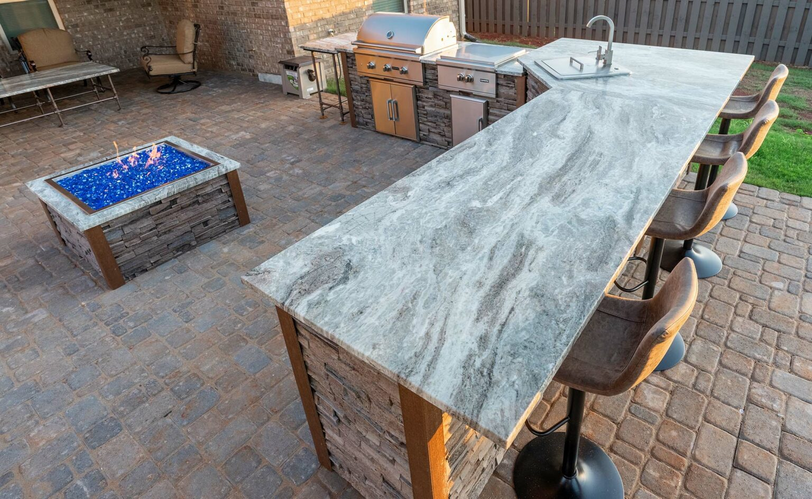
Best Granite and Concrete Outdoor Countertops for Sale: The Ultimate Comparison Guide
The Architectural Foundation of Outdoor Culinary Spaces
The Rising Trend of Permanent Outdoor Kitchens
The modern residential landscape has shifted significantly toward creating a seamless transition between indoor and outdoor living. One of the most critical decisions a homeowner or developer faces in this transition is selecting the right material for outdoor kitchen surfaces. The debate between granite vs. concrete outdoor countertops is more than just an aesthetic choice; it is a decision involving structural engineering, thermal dynamics, and long-term maintenance requirements. As outdoor entertaining becomes a standard feature in high-end residential design, the demand for materials that can withstand varying climates while maintaining their visual appeal has skyrocketed.
Choosing the right surface requires an understanding of how these materials interact with the elements. Unlike indoor countertops, outdoor surfaces are subjected to intense UV radiation, significant temperature fluctuations, and exposure to moisture and biological growth. Granite, a natural igneous rock, and concrete, a versatile man-made composite, represent the two leading contenders in this arena. This guide explores the intricate details of both materials, helping you decide which transactional investment provides the best ROI for your specific architectural needs and geographic location.
Defining the Transactional Value of Premium Surfaces
When searching for the best granite and concrete outdoor countertops for sale, buyers must look beyond the initial price tag. The transactional value includes the cost of raw materials, the complexity of fabrication, and the professional installation services required to ensure safety and durability. A granite slab is a one-time purchase of a unique geological artifact, whereas concrete often involves a multi-stage process of pouring, curing, and polishing. Both options offer distinct advantages that cater to different design philosophies, whether you prefer the “one-of-a-kind” natural patterns of stone or the “industrial-chic” customization of cast concrete.
Investing in high-quality outdoor countertops also impacts the overall property valuation. In many real estate markets, a fully equipped outdoor kitchen with premium countertops can offer a return on investment of over 100%. This makes the selection process not just a home improvement task, but a strategic financial decision. By understanding the technical specifications and lifecycle costs of granite and concrete, you can ensure that your purchase remains a functional and beautiful asset for decades rather than a maintenance liability that degrades under the sun and rain.
Deep Dive into Granite: The Natural Powerhouse
Insert image of the natural granite slab in an outdoor setting
Geological Composition and Environmental Resistance
Granite is an intrusive igneous rock formed from the slow crystallization of magma below the Earth’s surface. It is primarily composed of quartz and feldspar with minor amounts of mica, amphiboles, and other minerals. This mineral composition makes granite one of the hardest natural stones available, scoring between 6 and 7 on the Mohs scale. For outdoor use, this hardness translates to exceptional scratch resistance and the ability to withstand heavy culinary use without chipping or wearing down. Furthermore, because it was formed under extreme heat and pressure, it is naturally resistant to thermal expansion, making it ideal for placement near high-heat grills and pizza ovens.
One of the primary benefits of granite in an outdoor environment is its incredible resistance to UV rays. Unlike synthetic solid surfaces or quartz (which uses resin binders), the colors in granite are entirely natural and will not fade or yellow even after years of direct sunlight exposure. This makes “Best Granite Outdoor Countertops” a top transactional keyword for those living in high-UV regions like Indonesia or the southern United States. When properly sealed, granite’s low porosity prevents the absorption of liquids and the growth of mold or mildew, ensuring that the preparation surface remains hygienic for food contact regardless of the humidity levels.
Aesthetic Diversity and Maintenance Profiles
Because granite is a product of nature, no two slabs are identical. This provides a level of exclusivity that is highly sought after in luxury architectural planning. Homeowners can choose from a vast palette ranging from the deep, consistent blacks of Absolute Black granite to the vibrant, swirling blues and silvers of Blue Pearl. This diversity allows the outdoor kitchen to either blend in with the natural surrounding landscape or serve as a dramatic focal point. The surface can also be finished in different textures: polished for a high-gloss reflective look, or “honed” and “leathered” for a more matte, slip-resistant feel that hides fingerprints and water spots better in an outdoor setting.
Maintenance for outdoor granite is surprisingly straightforward but essential. While the stone itself is nearly indestructible, the sealant is the primary line of defense against staining from grease, wine, or acidic bird droppings. Most outdoor kitchen installers recommend applying a high-quality penetrating sealer once a year. This is a simple wipe-on, wipe-off process that takes less than an hour. Aside from sealing, daily cleaning usually only requires a mild soap and water solution. The lack of intensive maintenance requirements makes granite a preferred choice for busy homeowners who want to enjoy their outdoor space without a constant upkeep schedule.
The Artisanal Versatility of Concrete Countertops
Insert image of the polished custom concrete countertop
Customization and Structural Design Flexibility
Concrete countertops offer a level of creative freedom that is virtually impossible to achieve with natural stone. Since concrete is cast in a mold, it can be formed into any shape, thickness, or curve required by the architectural layout. This makes it particularly useful for 5m x 10m house layouts or compact urban balconies where space optimization is critical. Designers can integrate features directly into the pour, such as built-in drainboards, trivets for hot pans, or even integrated sinks that create a monolithic, seamless look. This flexibility is the primary reason developers often seek out “Custom Concrete Outdoor Countertop Installation” services to fulfill specific functional requirements.
Beyond shape, the aesthetic customization of concrete is limitless. By using different pigments, aggregates (like crushed glass, marble chips, or glow-in-the-dark stones), and staining techniques, concrete can mimic the look of wood, industrial metal, or aged limestone. The “industrial-chic” aesthetic is currently a major trend in interior and exterior design, and concrete fits this niche perfectly. It develops a unique patina over time, which many homeowners find charming and characteristic of an organic living space. For those who want a truly bespoke, one-of-a-kind kitchen that reflects their personal style, concrete is the undisputed champion of customization.
Technical Composition and Curing Technology
Modern outdoor concrete is a far cry from the standard sidewalk mix. Professional installers use high-performance fiber-reinforced concrete (HPFRC) or Glass Fiber Reinforced Concrete (GFRC). These technologies incorporate glass fibers and specialized polymers that provide incredible tensile strength and crack resistance without the need for heavy steel rebar. This makes the countertops lighter and easier to install while ensuring they can handle the structural load of heavy outdoor appliances. The chemical curing process is also carefully managed to ensure maximum density, which minimizes the inherent porosity of the material and creates a surface that is much more resistant to the freeze-thaw cycles found in colder climates.
The benefit of using GFRC technology is that it allows for thinner, more elegant profiles that are still exceptionally strong. This reduces the weight on the underlying cabinetry or island framing, which is a significant advantage when building on decks or rooftops. Additionally, the use of pozzolans in the mix helps to refine the pore structure of the concrete, making it smoother and more receptive to high-performance sealers. While concrete does require more initial attention during the curing and sealing phases than granite, the result is a structurally sound, highly personalized surface that serves as a testament to modern engineering and artisanal craftsmanship.
Technological Benefits of Premium Outdoor Surfaces
Thermal Mass and Heat Dissipation Technology
One of the most significant technological advantages of both granite and concrete is their high thermal mass. In an outdoor setting, surfaces can become dangerously hot under direct sunlight. However, dense granite and professionally mixed concrete have the ability to absorb and slowly dissipate heat. This means that even in the middle of a summer afternoon, the surface remains touchable and functional for food preparation. This is a critical safety benefit compared to dark-colored metal surfaces or synthetic materials that can reach temperatures high enough to cause skin burns.
Furthermore, this thermal stability is beneficial when placed adjacent to grills. As a developer or system administrator might appreciate the heat management in a server room, the same logic applies to a kitchen island. The stone and concrete act as a heat sink, protecting the integrity of the surrounding structure and preventing thermal warping of the cabinetry. This inherent property reduces the need for additional insulated jackets in many installation scenarios, though they are still recommended for safety. The ability of these materials to maintain a relatively stable temperature profile contributes significantly to the comfort and longevity of the entire outdoor installation.
Advanced Nano-Sealing and Protective Coatings
The longevity of an outdoor countertop is directly tied to the technology of the sealer used. Recent advancements in nanotechnology have led to the creation of penetrating sealers that work at a molecular level. Unlike old-fashioned topical coatings that could peel or yellow under UV light, these modern sealers penetrate deep into the pores of the granite or concrete, bonding with the substrate to create an invisible barrier. This technology allows the material to “breathe,” letting moisture vapor escape while preventing liquid water and oils from entering. This is a game-changer for outdoor concrete, which was historically prone to staining.
For granite, these nano-sealers can last up to 10 years in some cases, although annual checks are still advised. For concrete, these sealers can be engineered to provide a high-gloss finish or a completely natural look while offering chemical resistance to common household acids like lemon juice or vinegar. This chemical engineering ensures that the “Benefit of Specific Product” selections listed below perform at the highest possible level. By utilizing these advanced protective coatings, the transactional value of the countertop is protected against environmental degradation, ensuring that the surface remains as beautiful as the day it was installed.
Top 5 Real-World Products for Outdoor Countertops
Insert image of the Uba Tuba Granite Slab
1. Uba Tuba Granite Slabs
Uba Tuba granite is one of the most popular and cost-effective choices for outdoor kitchens worldwide. Originating primarily from Brazil, this stone features a very dark green, almost black base with flecks of gold, silver, and lighter green. It is an exceptionally dense granite with a very low absorption rate, making it naturally resistant to staining and moisture even before a sealer is applied. Its tight grain structure and high quartz content make it incredibly durable against the wear and tear of outdoor cooking utensils and heavy pots.
The benefit of choosing Uba Tuba for an outdoor project is its versatility and availability. Because it is widely quarried, it is often more affordable than “exotic” stones while offering superior performance. It matches almost any cabinetry style, from modern stainless steel to rustic wood finishes. For homeowners concerned with “how to buy,” this is a product that can be found at almost any local stone yard or major home improvement retailer. It provides a high-end look without the high-end price tag, making it a smart transactional choice for budget-conscious but quality-focused developers.
Use Case: This product is the perfect solution for homeowners who want a dark, sophisticated look that hides dirt and water spots. It solves the problem of choosing a material that is both budget-friendly and durable enough for high-traffic outdoor entertaining. People use it because it offers the “prestige” of granite with the reliability of a commercial-grade building material.
Insert image of the Z Counterform DIY Concrete Kit
2. Z Counterform Liquid Step Countertop Kit
For the DIY enthusiast or the custom builder, the Z Counterform system is a revolutionary product that simplifies the creation of cast-in-place concrete countertops. This kit includes the forms that snap onto the top of your cabinetry, allowing you to pour the concrete directly on-site rather than in a remote shop. This eliminates the need for heavy lifting and the risk of breaking a pre-cast slab during transport. The system is designed to create a professional edge profile, such as a bullnose or square edge, with minimal effort.
The technological benefit of this specific product is its integration with high-strength concrete mixes. By using the Z Counterform system, you can ensure a perfect level and a professional finish that rivals the work of expensive specialized contractors. It is particularly beneficial for complex outdoor kitchen layouts where multiple angles or integrated features are required. This product empowers the user to take control of the creative process, choosing their own colors and finishes to match their “Ivy Interior Design” vision.
Use Case: This product solves the problem of high professional labor costs and the logistical nightmare of transporting large concrete slabs. It is needed by people who want a custom-shaped countertop that fits their space perfectly but don’t want to pay the premium for a full-service fabrication shop. It allows for a “professional result” on a “hobbyist budget.”
Buy Z Counterform DIY Concrete Kit
Insert image of the Absolute Black Granite Honed Finish
3. Absolute Black Granite (Honed)
Absolute Black granite is the gold standard for modern, minimalist outdoor design. Unlike Uba Tuba, which has visible flecks, Absolute Black offers a deep, consistent, and ink-like appearance. When ordered in a “honed” finish, the surface is smooth and matte rather than shiny. This finish is specifically beneficial for outdoor use because it does not reflect the sun’s glare, making it more comfortable to work on during bright days. It provides a stark, beautiful contrast to stainless steel appliances and natural greenery.
The technical advantage of Absolute Black is its incredible density. It is one of the least porous granites on the market, which means it requires less frequent sealing than lighter-colored stones. It is practically impervious to acids and oils, making it the most “bulletproof” natural stone option for an outdoor chef. While it can be slightly more expensive than standard granite, the long-term benefit of reduced maintenance and timeless style makes it a premium transactional investment.
Use Case: This product solves the problem of sun glare and the visual “busyness” of some natural stones. It is needed by homeowners who want a sleek, contemporary outdoor kitchen that remains easy to clean and maintains a “new” look for decades. It is the ultimate choice for a high-end, low-maintenance aesthetic.
Insert image of the Quikrete Countertop Mix bag
4. Quikrete Countertop Mix (High Strength)
Quikrete Countertop Mix is a specialized concrete blend designed specifically for casting countertops. Unlike standard bag concrete, this mix contains a high concentration of cement, refined aggregates, and flow-enhancing additives. These ingredients allow the mix to flow easily into molds, ensuring a smooth surface with minimal air bubbles (voids). It reaches a compressive strength of over 5,000 PSI, which is significantly stronger than standard construction concrete, ensuring it won’t crack under the weight of heavy grills or seasonal shifts.
The primary benefit of using a specialized mix like Quikrete is the consistency of the results. It is formulated to minimize shrinkage, which is the most common cause of cracking in concrete countertops. Because it is a “pre-blended” product, users don’t have to worry about the chemistry of mixing their own ratios of sand and cement. It provides a reliable, predictable base that can be stained or polished to achieve a variety of industrial looks. For those looking for “where to buy,” this product is readily available at most hardware stores globally.
Use Case: This product solves the problem of structural failure in DIY concrete projects. It is needed by contractors and homeowners who want the artisanal look of concrete but require the structural insurance of a scientifically engineered mix. It provides peace of mind that the countertop will survive harsh outdoor conditions without crumbling or cracking.
Insert image of the Blue Pearl Granite Slab with its reflective crystals
5. Blue Pearl Granite Slabs
Blue Pearl is an exotic granite quarried in Norway, famous for its large, iridescent crystals of labradorite. These crystals catch the light and create a stunning metallic shimmer that shifts from silver to deep blue depending on the angle. In an outdoor setting, this stone is truly spectacular, reflecting the sky and the surrounding environment. It is an extremely hard stone with a very low porosity, making it exceptionally resistant to the elements and biological growth.
The benefit of Blue Pearl is purely its unparalleled aesthetic impact combined with top-tier performance. It is a “statement” stone that adds a layer of luxury to any outdoor project. Because of its reflective nature, it also tends to stay cooler in the sun than darker, solid black stones. It is highly resistant to scratching and chemical etching, making it a perfect choice for those who do a lot of heavy prep work and cooking outdoors. It represents the pinnacle of natural stone technology and beauty.
Use Case: This product solves the problem of “dull” or “standard” outdoor designs. It is needed by people who want their outdoor kitchen to be a conversation piece and a work of art. It is used by luxury developers to differentiate their properties and by homeowners who want the highest quality material nature has to offer.
Strategic Problem Solving with Outdoor Countertops
Solving the Problem of Weather-Induced Degradation
The primary challenge with any outdoor installation is the inevitable fight against nature. Wood rot, metal rust, and plastic warps. Granite and concrete solve this fundamental problem by being inert, inorganic materials. When a homeowner chooses the “Best Granite and Concrete Outdoor Countertops for Sale,” they are solving the problem of frequent replacements. These materials do not support the growth of termites, they do not corrode in salty coastal air, and they do not melt under the intense heat of a barbecue. By using these heavy-duty surfaces, you ensure that the core of your outdoor kitchen remains structurally sound for the life of the home.
In addition to structural durability, these materials solve the problem of food safety in an outdoor environment. Porous surfaces can trap bacteria and food particles, leading to unsanitary conditions. The density of granite and the advanced sealing technology used for concrete ensure that the surface can be completely sanitized with simple cleaners. This is why people need to use these materials; they provide a hygienic space to feed friends and family without the worry of cross-contamination or hidden mold. The investment in these high-quality surfaces is ultimately an investment in the health and safety of your household.
Why Professional Installation and Quality Sourcing Matter
While the materials themselves are strong, their performance is only as good as the installation. Heavy granite slabs require a perfectly level foundation to prevent stress fractures, and concrete requires precise chemical ratios to prevent curing issues. This is why people need to engage with professional installers who understand the specific requirements of outdoor builds. Professionals can ensure that the “granite vs concrete” choice is implemented correctly, with proper expansion joints, adequate support for overhanging sections (like breakfast bars), and secure mounting for appliances. This level of expertise prevents the “problems” of shifted slabs or cracked concrete later on.
Furthermore, sourcing the right product from a reputable seller ensures that you are getting “First Choice” material rather than “Commercial Grade” slabs that may have hidden fissures or repairs. High-quality vendors provide warranties and support that are crucial for high-value transactional purchases. By following the buying links provided in this guide, you can connect with established suppliers who offer the necessary technical support and quality assurance to make your project a success. Choosing the right surface and the right professional to install it is the most effective way to solve the complexities of outdoor living design.
Where and How to Buy Premium Outdoor Countertops
Buying outdoor countertops is a multi-step process that usually begins with an online search for “Best Granite and Concrete Outdoor Countertops for Sale” to gauge pricing and styles. For granite, it is highly recommended to visit a local stone fabricator or a large-scale retailer like Home Depot or Lowe’s. This allows you to hand-pick the specific slab that will be used in your project, ensuring the patterns and colors match your expectations. For concrete, you have the option of buying DIY kits and mixes from specialized online retailers like Concrete Countertop Solutions, or hiring a local artisan who specializes in custom-cast outdoor surfaces.
When purchasing, always ask about the “origin” of the stone or the “mix design” of the concrete. Ensure that the price quoted includes templating (measuring), fabrication (cutting), and installation. Many suppliers will also offer to sell you the necessary maintenance products, such as sealers and cleaners, at the time of purchase. Using the links provided in the product section of this article will take you to verified retailers where you can begin your journey toward a world-class outdoor kitchen.
Frequently Asked Questions (FAQ)
1. Which is cheaper: granite or concrete for an outdoor kitchen?
Generally, granite can be more cost-effective if you choose a common variety like Uba Tuba or New Venetian Gold. The cost of raw granite has decreased due to global shipping and advanced quarrying techniques. Concrete, while having lower raw material costs (sand and cement), often carries a higher labor cost because it must be custom-molded, hand-finished, and carefully cured. However, if you are a DIY enthusiast using a kit, concrete can be the most affordable way to get a premium look.
2. Does granite or concrete get hotter in the sun?
Both materials have high thermal mass and will absorb heat. However, the color of the material plays a larger role than the material itself. A dark Absolute Black granite slab will absorb more heat and feel hotter than a light-colored, natural grey concrete slab. To minimize heat, choose lighter colors or “honed” finishes that don’t absorb as much radiant energy. Both materials are far superior to metal or dark synthetic materials in terms of heat management.
3. Will my concrete countertop crack over time?
All concrete has the potential for “hairline” cracks, which are often considered part of its aesthetic charm and patina. However, major structural cracks can be avoided by using high-performance mixes like GFRC and ensuring the island structure is perfectly stable. Granite is less prone to cracking than concrete but can fracture if the underlying cabinets shift or if it is subjected to extreme impact. Proper installation by experienced professionals is the best way to prevent cracking in both materials.