
FAYETTEVILLE, GA. (WBRC) – WBRC is continuing our coverage on the data center boom as leaders here weigh plans for one in Bessemer. What’s it like to have a data center in your community? 6 On Your Side Investigates went to Georgia to find out.
When you send something from your phone or computer “up to cloud”, you may think it goes somewhere in the sky. But you are actually sending it to physical places on the ground, like massive data centers that are popping up around the country.
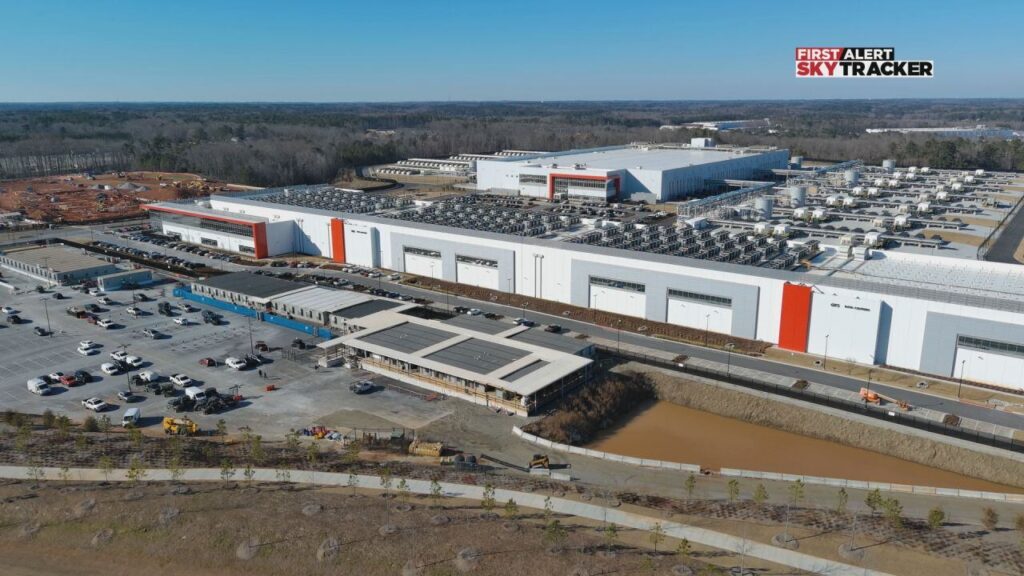
About 20 miles south of Atlanta is Fayette County, Georgia. It’s home to a massive data center currently under construction in Fayetteville. The QTS data center is a multi-year development and sits on more than 600 acres.
At least one of the buildings already open is a Microsoft AI superfactory. It’s a building that houses hardware that speeds up AI development, training and deployment and connects with similar factories around the country.
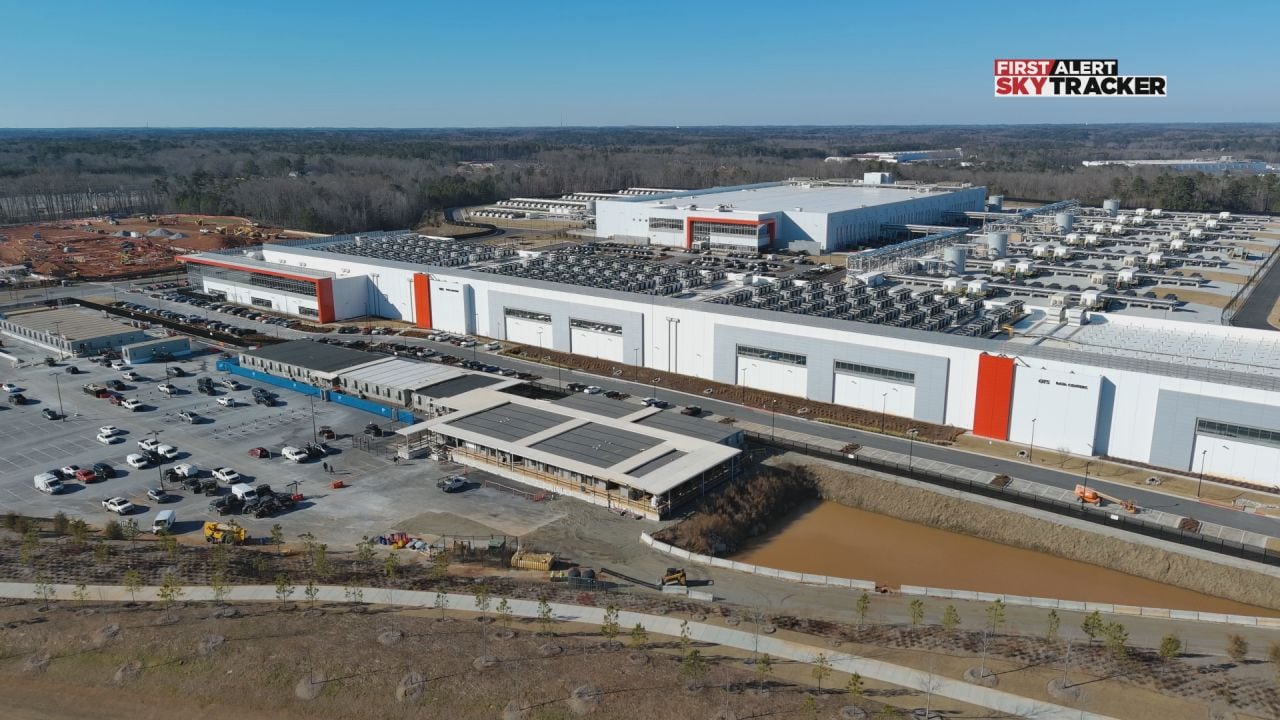
Neighborhoods surround the campus. Before construction, city leaders received push back from neighbors, like Diana Dietz, who raised concerns about power, water, land usage, and potential costs.
“I see something that does not belong there. Fayette County is a bedroom community,” Dietz said.
Dietz moved to Fayetteville decades ago for peace and quiet. She tells us it’s been anything but that for the past three years.
“These heavyweight vehicles are tearing up our residential roads. There’s traffic congestion,” Dietz said.
Dietz is not against the technology or that data centers exist. She’s concerned about them being built near neighborhoods, the impact on the environment, and the possibility of higher power and water bills in the future.
“In a small county that people came to enjoy the tranquility, the trees, the bunnies, the deer having fawns in their yards. Now we’re going to be surrounded by these huge, ugly, noisy industrial buildings,” Dietz said.
Georgia sees data center boom
Over the past few years, Georgia has seen a boom in data center development according to Amy Sharma, Executive director of Science for Georgia.
“The biggest reason is we have a lot of cheap land, power, and water,” Sharma said.
Sharma’s group informs the public about data centers. Her biggest concern is water usage.
“These things are going up and they’re just everywhere now and they use a lot of water and it’s really unsustainable to put in something that uses kind of a factory’s worth of water in every county,” Sharma said.
It’s unclear how many data centers are in Georgia. Some estimates have 100 to 200. Sharma says the industry doesn’t have a uniform reporting structure.
Because the massive data centers are new, Sharma says it’s hard to say right now if power and water bills are rising in Georgia. She feels higher bills will eventually show up.
State leaders are trying to get ahead of it with legislation, forcing tech companies to pay their “fair share” of infrastructure costs.
Huge transmission lines are also being built through the community. Sharma says they are going to the data center. Some are in people’s front yards.
“They’re destroying residential neighborhoods by turning them into industrial, literally into industrial right of ways to feed the data centers,” Dietz said.
QTS, city leaders cite economic benefits
In a statement to WBRC, QTS said it’s committed to paying its fair share of power costs so that data centers won’t increase costs for residents.
Here’s more from QTS:
“QTS is proud to provide the digital infrastructure critical to the future of our country and economy. QTS is helping grow the Fayette County economy by fueling an ecosystem of jobs, working with local suppliers and contributing hundreds of millions of dollars in tax revenue to communities. This revenue supports local priorities like schools, roads and housing.
There are more than 4,650 building trade workers supporting the development of our Fayetteville data center campus. Our Fayetteville data center campus will also create 800 to 1,000 permanent jobs.
QTS is committed to paying its fair share of power costs, so that our data centers won’t increase costs for communities.
QTS is the global leader in water-free cooling and our data centers do not consume water for cooling.”
QTS
City of Fayetteville and county development leaders say the data center will have a big economic impact on the area.
“If someone were to ask me about QTS, I would tell them QTS is not only a stakeholder, but a partner in our community. When we met QTS and their staff, it changed our thinking about data centers in general,” Fayetteville Mayor Edward Johnson said.
“Property taxes for the QTS Data Center project in Fayetteville amounted to more than $1 million in 2024. In 2016, property taxes on the then-county-owned land would’ve been $31,000. The project, which has completed one of three buildings, sits on 615 acres,” Niki Vanderslice, president and chief executive officers of the Fayette County Development Authority said.
Sharma and others would like to see the community have more input on where and how data centers are built.
“They aren’t hiding behind these non-disclosure agreements until its almost too late, right. So, community members are working with them from the get-go about. Hey, you are coming to our community. What are the benefits that you’re going to be bringing to us?” Sharma said.
We wanted to see the inside of the big facility in Fayetteville, but QTS said it’s an active construction site and they couldn’t accommodate a tour due to safety and security.
This is part one of a series on the data center boom. Part two will include interviews with industry leaders about the driving force behind data centers and what the future holds.
Get news alerts in the Apple App Store and Google Play Store or subscribe to our email newsletter here.