How to clean a glass top stove and remove burnt-on messes
We’ve laid out everything you need to know for how to clean a glass stovetop—from items you’ll need to how often to clean it.
There are a lot of pros and cons to using a glass stovetop. The cons are that it doesn’t heat up as fast as a gas stovetop, nor does it have as precise of a temperature control. The pros are that it’s less expensive to install, and much, much easier to routinely clean. That’s a plus when rushed weeknight meals splatter all over the stovetop and spills are forgotten. Jacqueline Stein, a professional cleaner for Home Reimagined in Austin, Texas, gives us tips to keep it sparkling. We’ve laid out everything you need to know for how to clean a glass stovetop—from things to consider before getting started, to items you’ll need, to how often to clean it, and tips to prevent it from getting dirty in the first place.
How Often To Clean A Glass Stovetop
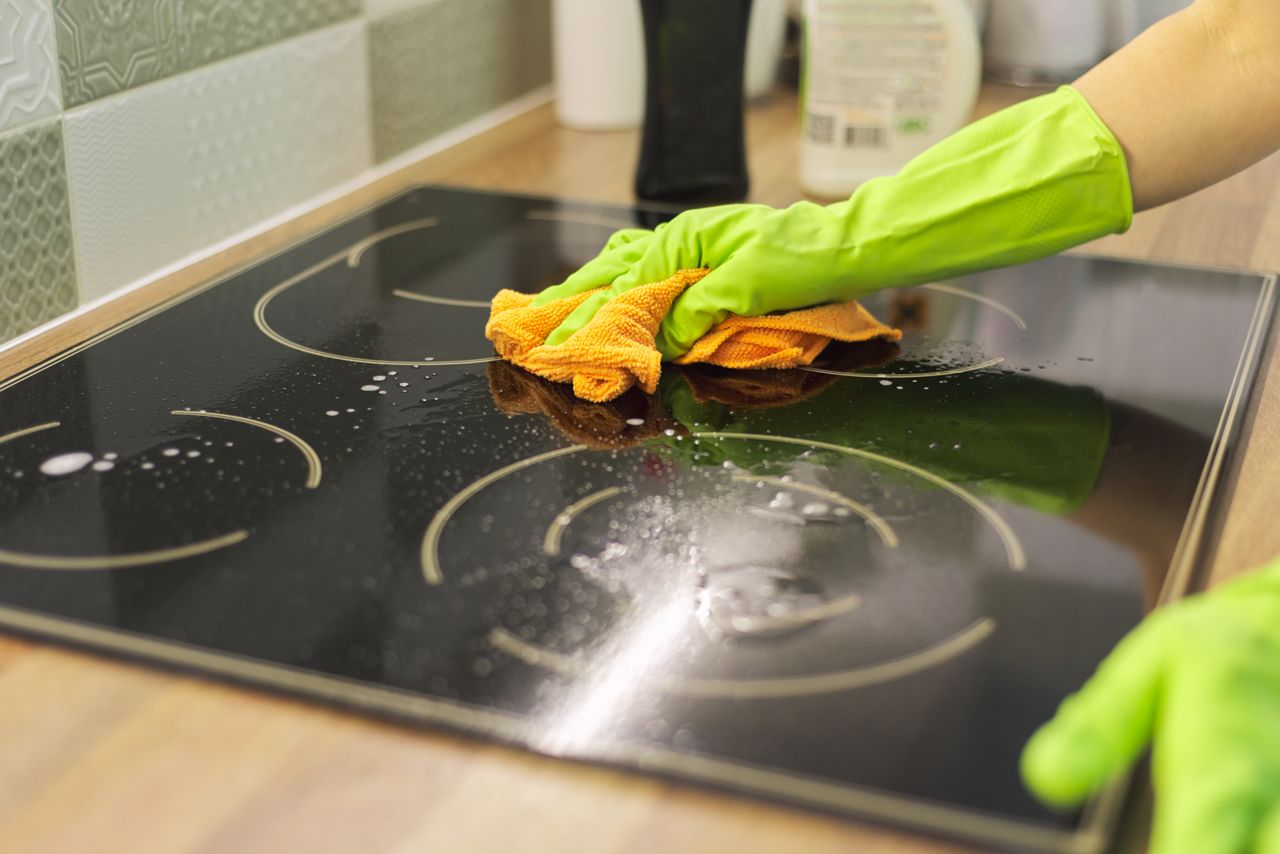
To maintain a cleaner stovetop, Stein recommends giving it a quick wipe-down with a soft cloth after each use (once it has cooled). “This helps to prevent buildup and allows you to go longer between deep cleans,” she says.
For those who cook often, aim to deep clean your glass stovetop once a week. “It may seem like a daunting task, but you can maximize your time by cleaning other things while the cleaning products are sitting on the stovetop,” suggests Stein. “This will help to ensure your stovetop stays in top condition and ready for your next cooking adventure.”
Considerations Before Getting Started
Before cleaning a glass stovetop, there are a few considerations that you should keep in mind to ensure that you don’t damage the surface or create a hazardous situation.
Wait For The Stovetop To Cool
Before you start cleaning, make sure that the glass stovetop has completely cooled down. “This is important because if you try to clean a hot stovetop, the cleaner can evaporate too quickly and leave streaks or stains behind,” explains Stein. “Or you could burn or hurt yourself if it’s still hot.”
Choose The Right Cleaner
Avoid using abrasive cleaners, like scouring pads or steel wool, as these can scratch the surface. “Instead, opt for a cleaner specifically designed for glass stovetops,” suggests Stein.
Use A Soft Cloth
When cleaning your glass stovetop, use a soft cloth that won’t scratch the surface. Microfiber cloths or cotton rags are good options.
Avoid Excess Moisture
Too much moisture can damage a glass stovetop, so be careful not to use too much cleaner or water when cleaning. “Use a minimal amount of cleaner and a damp cloth to clean the surface,” warns Stein. “Wipe up any excess moisture with a dry cloth.”
Be Gentle
When cleaning your glass stovetop, be gentle and avoid applying too much pressure. Use a circular motion to clean the surface, and don’t scrub too hard.
What You Need
- Mild soap (Dawn Dish soap) or multipurpose cleaner (Fantastik)
- Bucket of warm water
- Weiman Glass Cook Top Cleaner & Polish
- Clean, soft cotton or microfiber rags
- Soft brush or sponge
- Razor blade
- Glass cleaner (without ammonia) or distilled white vinegar in a spray bottle
- Paper towels or lint-free rags
How To Clean A Glass Stovetop
Step 1: Wipe Away Debris
Remove any visible debris, such as food chunks, crumbs, or dust.
Step 2: Rinse With Warm Water
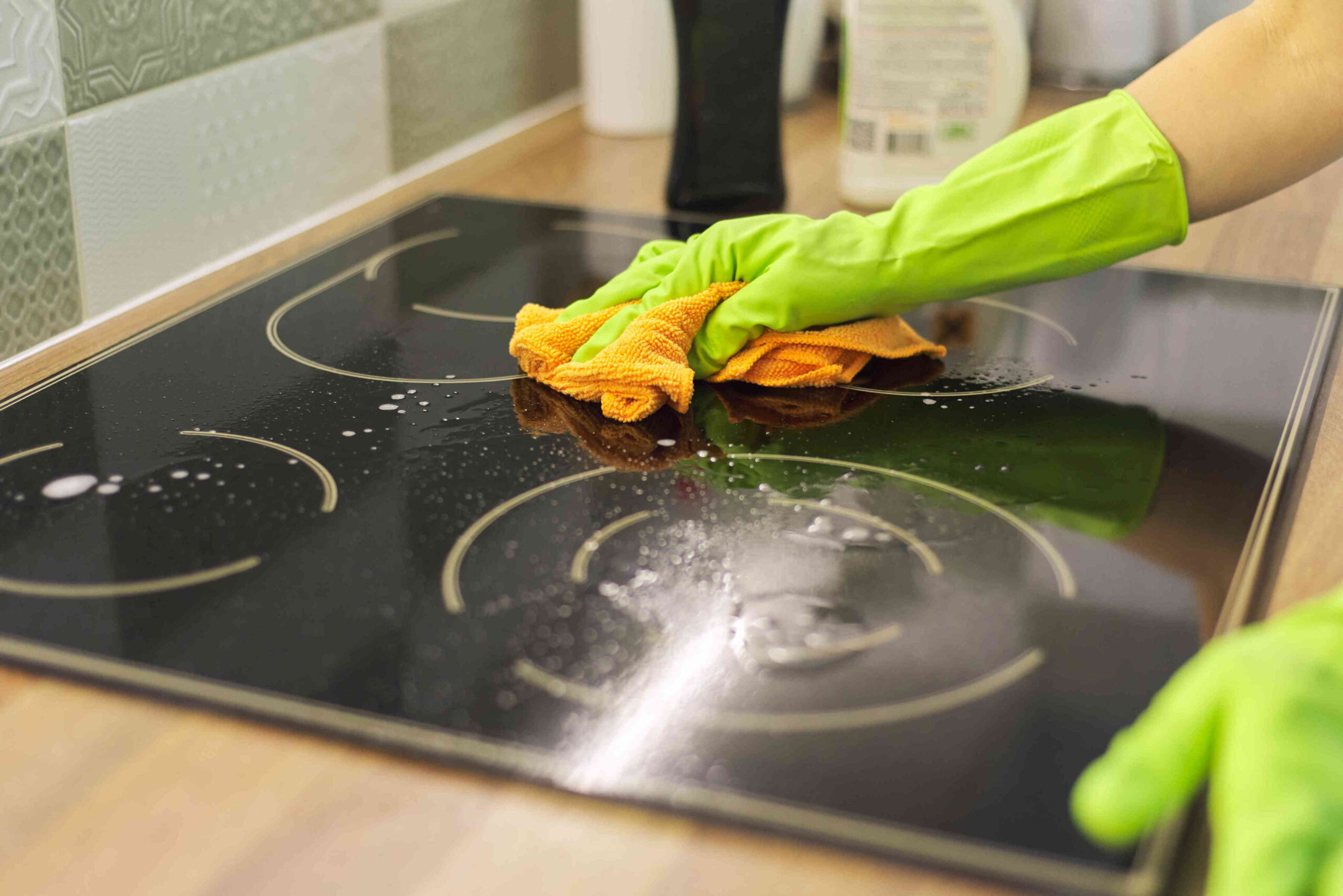
Wipe the stovetop with a damp soft cloth and warm water mixed with dish soap (such as Dawn Dish soap) or wipe with a multipurpose cleaner. This step is important to remove all gunk and stuck-on food before moving on to conditioning and shining the surface, according to Stein.
Step 3: Scrape The Surface
If large stuck-on food chunks remain, carefully scrape them off with a razor blade, being mindful not to scratch the stovetop. “I like the blade that comes with the Weiman Glass Cook Top Cleaning Kit,” says Stein.
Step 4: Apply Cleaner
Apply Weiman Glass Cook Top Cleaner & Polish to the surface, spreading it evenly with a paper towel or soft cloth to cover the full surface, but not rubbing in just yet. Let the product sit for 15-30 minutes, depending on the level of grime.
Step 5: Scrub The Surface
Use a damp soft brush, cloth, or sponge to scrub the surface, removing stains without scratching the glass.
Step 6: Wipe Clean
Wipe away any leftover product and residue with a wet cotton cloth or soft microfiber cloth.
Step 7: Dry
Dry the glass stovetop completely to avoid water spots.
Step 8: Repeat As Needed
Repeat the process, if necessary, to remove any remaining debris.
Step 9: Polish
Polish the stovetop with an ammonia-free glass cleaner or white vinegar mixed with equal water to add shine, using a lint-free cloth or paper towel to avoid streaks.
Tips To Keep Your Glass Stovetop Clean Longer
The more often you do small maintenance to your glass stovetop, the less often you will have to deep clean it. Below are Stein’s best tips for keeping your glass stovetop clean in the long run:
- Give your stovetop a quick wipe after every use. This helps to prevent buildup and keeps your stovetop looking shiny and new.
- Use a soft cloth and a mixture of warm water and a detergent or multipurpose cleaner to remove any gunk and stuck-on food before beginning the cleaning process. This will make it easier to deep clean your stovetop.
- Be careful when using razor blades to remove stuck-on food. “It can be effective, but you don’t want to scratch the glass,” says Stein. “Use a gentle touch and proceed with caution.”
- Don’t forget to dry the stovetop completely to prevent water spots.
Removing Stains From A Glass Stovetop
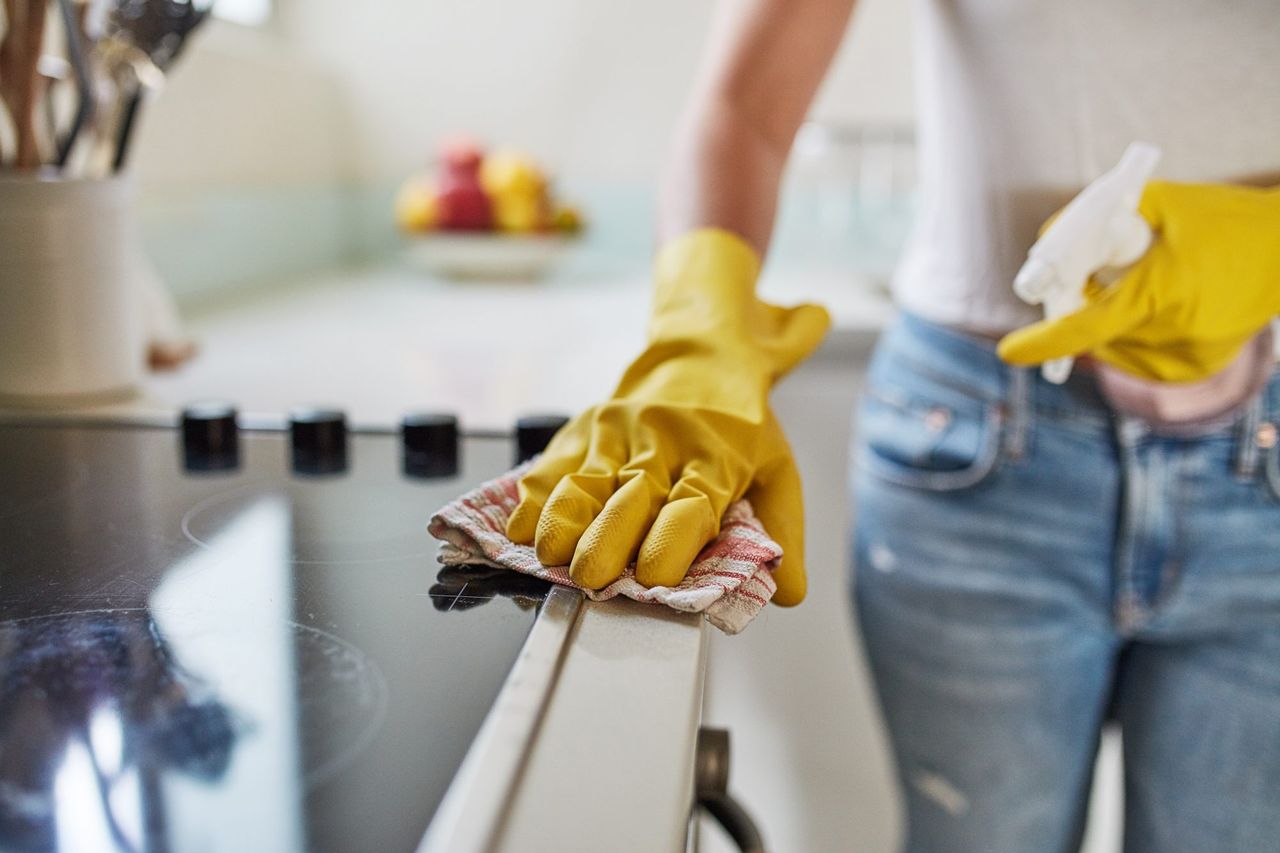
There are a number of items that can stain a glass stovetop. Oil splatters can leave a residue that burns onto the stovetop. Foods like tomato sauce and chocolate can cause staining if they aren’t wiped up right away. Water can leave mineral deposits and hard water stains on the stovetop, so it’s important to completely dry the surface when wet. Using the wrong cleaners, such as ammonia and glass cleaner, can cause permanent streaks and damage. Avoid any cleaners with bleach or ammonia, including disinfecting wipes.
To clean food stains or mineral deposits, spray the area with a mixture of equal parts white vinegar and water. For tougher stains, add a drop of dish soap to the mixture, and let it sit for 10 minutes. You can also sprinkle baking soda over the vinegar, cover it with a warm, damp cloth, and let it sit for 10 minutes. Scrub the area with a soft sponge, and wipe the solution away with a damp cloth. Use a clean cloth to thoroughly dry the area.
When To Call A Professional
If you notice deep scratches around the burners of your glass cooktop when cleaning or the surface looks cloudy, it may be time to call a professional. Some scratches can be buffed out. A pro can determine whether the glass can be fixed or if it needs to be replaced. To avoid scratches, don’t slide heavy pots across the surface—pick them up and move them instead. And clean up spills as soon as the surface is cool. Food residue can build up and cause cracks.
Keeping your glass stovetop clean is not only important for a healthy cooking environment, but it also adds to the aesthetic appeal of your kitchen. “With these tips, you can keep your glass stovetop looking its best and ready for your next culinary masterpiece,” adds Stein.
Read the original article on Southern Living