If your kitchen has one of these 5 details, it was probably remodeled in the 1980s
Walk into enough older homes and a pattern starts to emerge. Certain kitchens carry an unmistakable feeling – not quite dated, not quite charming, but somewhere in between.
They’re functional, solidly built, and oddly familiar in a way you can’t immediately place. Then it hits you: this kitchen is straight out of the Reagan era.
The 1980s left a very specific fingerprint on American kitchens. Like the hair of the era, 1980s kitchens were big and exaggerated.
More women were entering the workforce during this decade, and the kitchen became less of a domestic zone and more of a gathering space for the family. That cultural shift had a real effect on what materials, colors, and layouts people chose – and many of those choices are still visible in homes today.
Here are five telltale details that place a kitchen firmly in that decade.
Honey Oak Cabinets with Raised Panel Doors
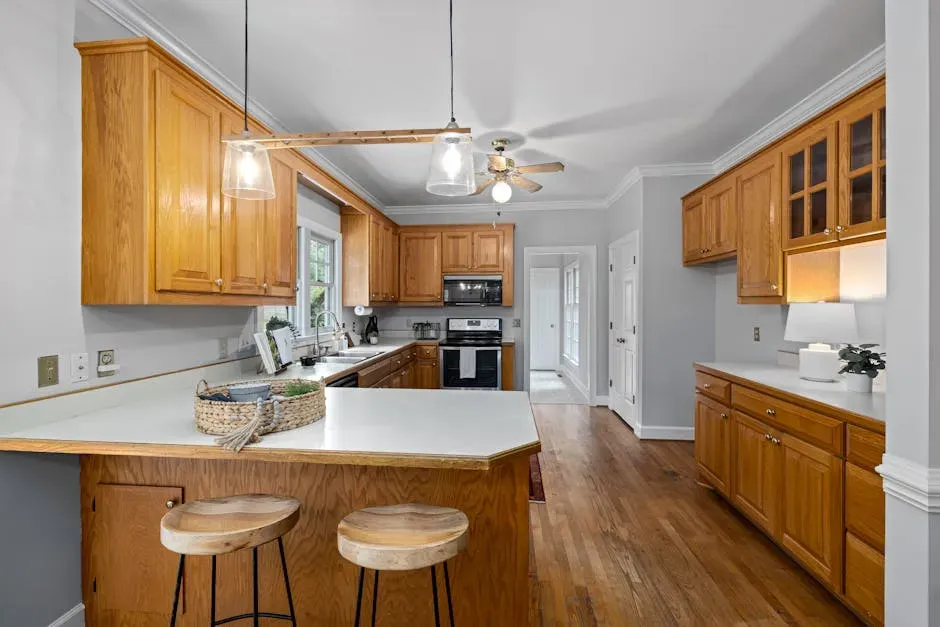
If those cabinets have a warm, golden-brown finish and doors with a decorative raised center panel, there’s a very good chance they were installed sometime between 1982 and 1989. Honey oak cabinets dominated the decade with their rich, golden hues and distinctive cathedral-style door panels featuring raised centers and decorative router details.
These cabinets typically paired with matching oak trim throughout the kitchen, creating a cohesive woodland aesthetic that felt both rustic and refined. Unlike earlier dark mahogany trends, honey-oak cabinets underscored middle-class kitchens throughout the ’80s.
The appeal was partly practical: oak is dense, hard-wearing, and ages well. Oak cabinets were a popular choice in the 1980s because of their classic appeal, not to mention the fact oak is a durable material that improves with age.
That’s probably why so many of them are still standing today, decades later, looking only slightly worse for wear.
Laminate Countertops in Cream, Beige, or Ivory
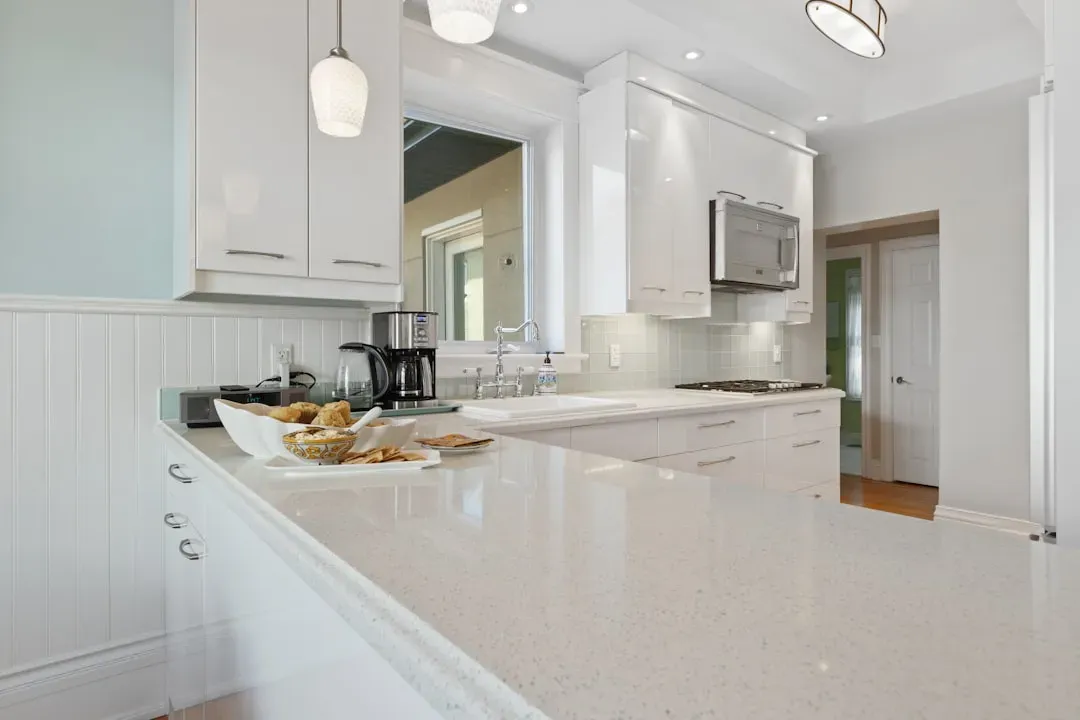
The countertop choices of the 1980s were notably restrained compared to the decade before. Countertops pretty much came in three choices: white tile, white or ivory Formica, and butcher block Formica.
Gone were the avocado greens and harvest golds of the 1970s. In their place came a calmer, more neutral approach that designers thought would feel timeless.
Formica and laminate countertops from this era usually came in some type of white, beige, cream, or otherwise warm color. These surfaces were affordable and easy to install, which made them the go-to choice for the wave of remodels happening across suburban America.
Laminate countertops, vinyl flooring, and wallpaper borders were all staples of the era. These materials were affordable but lacked durability.
Today, a slightly worn cream laminate counter with a rounded edge profile is one of the clearest signs you’re standing in an eighties kitchen.
The Euro-Style Cabinet with Integrated Wood Handle
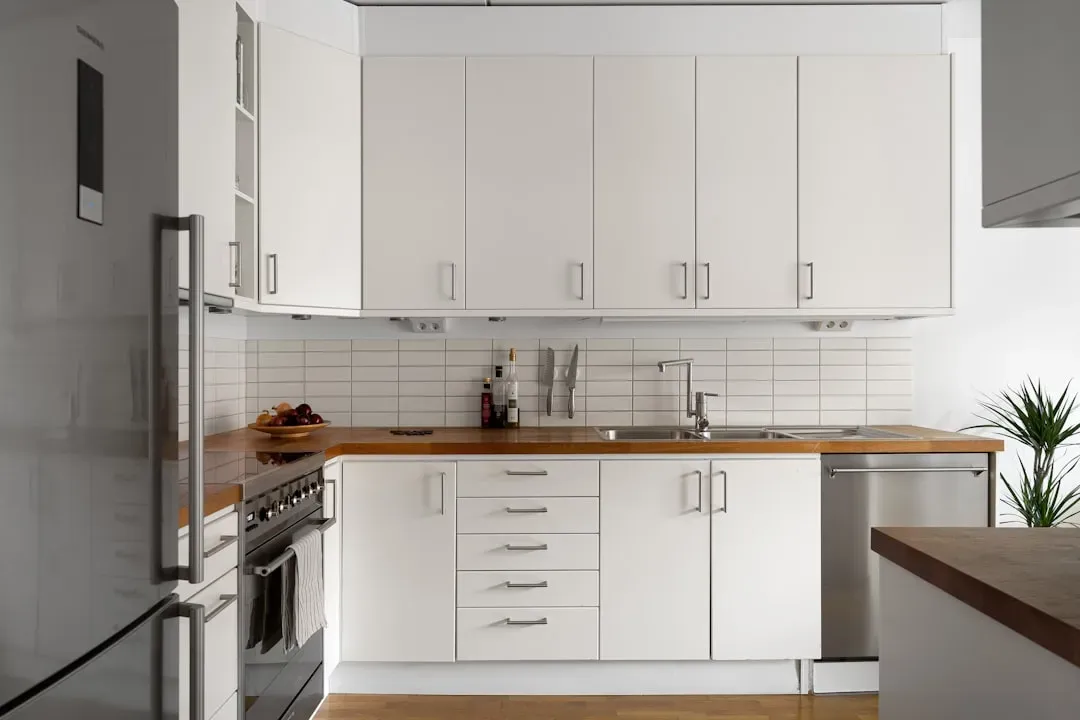
Not every 1980s kitchen went the oak route. A second defining look of the decade was cleaner, more minimalist, and borrowed heavily from European design.
The most recognizable kitchen design trend of the 80s was the Euro-style cabinet that featured a white laminate front with light-toned wood at the top that functioned as an integrated handle. It was considered sleek and modern at the time.
Laminate cabinets emerged in the 1980s and many kitchens adopted this Euro-style cabinet, which was a white cabinet with a wood trim. Another popular design concept were cabinets without handles, to give the kitchen a smooth, combined look.
If your kitchen has flat-front white or off-white cabinet doors with a subtle strip of wood along the bottom edge acting as a pull, that detail is almost certainly a product of 1980s thinking about what “modern” should look like.
A 4×4 Tile Backsplash, Often with a Decorative Motif
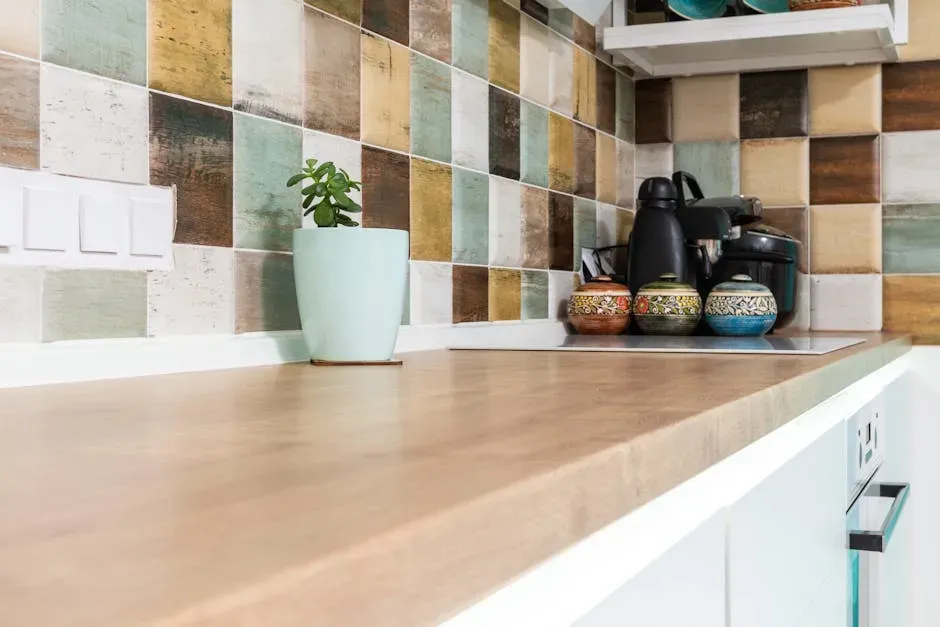
The backsplash is where the 1980s kitchen got a little more expressive. Small square ceramic tiles were everywhere, typically four inches by four inches, and they often came with a printed floral or geometric pattern worked in.
4×4 tile backsplashes, often with a decorative motif or pattern, were a signature feature of the era. Some were subtle, with a small vine or checkered border.
Others were considerably more bold. Tiles in 1980s kitchens weren’t just reserved for the walls.
In fact, a tiled kitchen countertop was perhaps the most coveted feature, though over the years there have been some concerns over how practical it is. The backsplash tiles were a more durable application, and many of them have survived in remarkably good shape.
Now considered retro kitchen ideas, designs of the era saw bold colors, geometric tiles, and bold wallpapers at the forefront of trends. Spot a row of patterned ceramic squares running along the wall behind the stove, and you can fairly confidently date the remodel.
Fluorescent Lighting and Brass Hardware
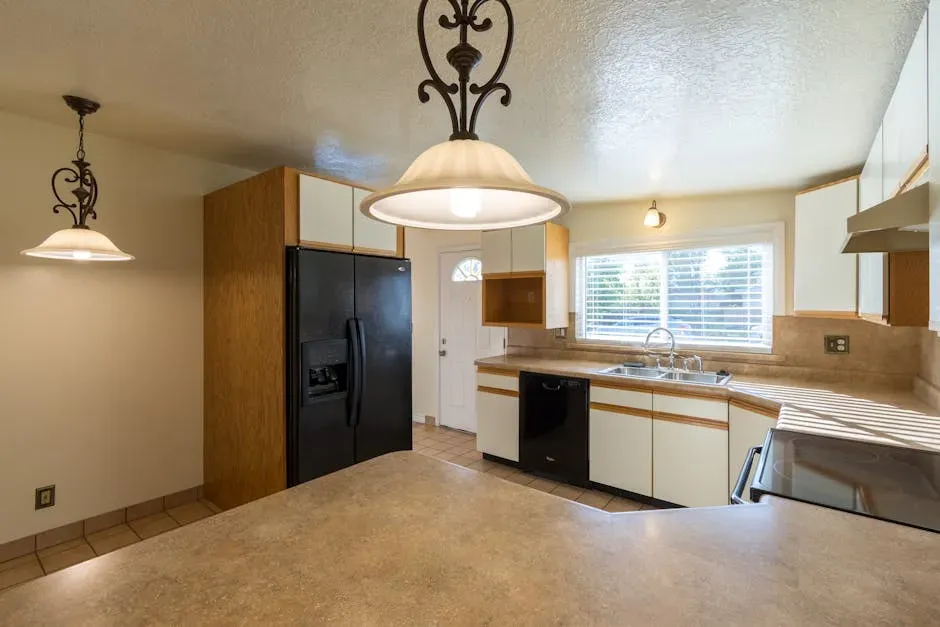
Two finishing details tend to confirm what the cabinets and countertops already suggest: the light fixtures and the hardware. Fluorescent box lights and brass chandeliers signal 1980s design more effectively than almost any other element.
The flush-mounted fluorescent “cloud” light was a fixture in kitchens across the country during this period, prized for its even, bright coverage over work surfaces. The honey oak finish provided a perfect backdrop for white laminate countertops and neutral tile backsplashes, while brass hardware added sophisticated metallic accents.
Brass pulls, hinges, and faucets were everywhere, chosen to complement the warm wood tones that defined so many of these spaces. A lot of exposed, slightly decorative hinges on cabinets were also a hallmark of the era.
If your kitchen still has those visible brass hinges alongside a humming fluorescent panel overhead, you’re almost certainly looking at a time capsule from four decades ago. These details don’t make a kitchen bad.
Many of the homes remodeled during this period were built with genuine care, and the materials chosen were the best available options at the time. What’s interesting is how quickly the eye learns to read these signals – the warmth of the oak, the matte cream of old Formica, the quiet gleam of a brass pull.
A kitchen, more than almost any other room, tells you exactly when someone decided to make it feel new.